
Induction Reversing Ceramic Hydraulic Filter Press Piston Pump Solution Delivers Superior Filtration Performance
2026-11-02
Most filter press pumps fade when the slurry turns abrasive or the pressure climbs. The induction reversing ceramic hydraulic filter press piston pump from Sinou is engineered to push past those limits. By merging induction reversing motion with ceramic-hardened internals, it keeps filtration rates high and downtime low. If your process demands cleaner discharge and longer service intervals, this solution deserves a closer look.
What Induction Reversing Does to Filter Cake Moisture
Induction reversing pushes the filter cake through a rapid polarity shift that disrupts the thin water films clinging to particle surfaces. Instead of relying solely on mechanical squeeze or vacuum pull, the alternating electromagnetic field makes those films oscillate and break away from the pore throats. The result is a cake that surrenders moisture more readily than it would under a single-direction force.
The effect becomes most visible in fine-particle cakes where capillary retention is stubborn. When the induction field reverses, the electroosmotic flow changes direction multiple times, preventing water from re-establishing stable menisci inside the narrow channels. This repeated disturbance lowers the residual saturation point, so more water drains out before the cake discharges.
Operators who tune the reversal frequency to match the cake's natural response often see moisture drops of two to five percentage points. That may sound small, but it cuts downstream drying costs and reduces handling problems such as sticking or freezing. The key is not to over-reverse, as too much agitation can re-compact the cake and trap moisture again.
Ceramic Plates Built for Abrasive Slurries and Long Runs
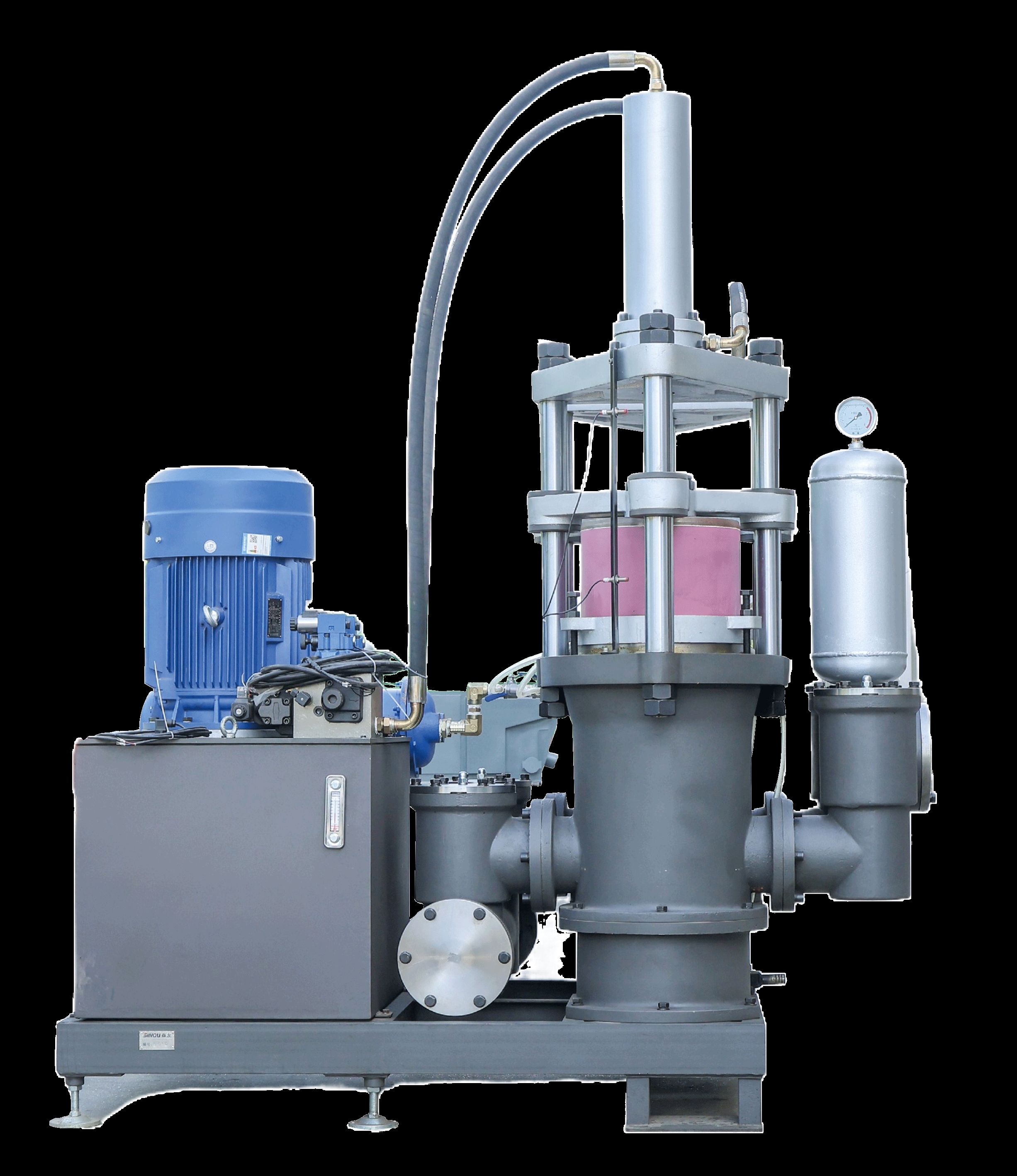
When a slurry line starts chewing through standard wear plates in a matter of weeks, the problem usually isn't the pump or the piping—it's the material choice. Ceramic plates designed for abrasive slurries take a different approach. Instead of relying on surface hardness alone, they use carefully graded alumina or silicon carbide bodies that resist both sliding wear and the kind of localized impact that happens when coarse particles hit at an angle. The result is a plate that doesn't just last longer; it holds its original thickness far into the run, which keeps flow characteristics predictable and reduces the frequency of unplanned shutdowns.
Long runs demand more than just a tough face. These plates are often backed with a resilient layer—rubber, polyurethane, or a fiber-reinforced composite—that absorbs the shock of heavy slurry without cracking the ceramic. The bond between ceramic and backing is just as critical: a weak interface leads to spalling, where chunks of ceramic pop off under repeated impact. Quality manufacturers use a high-strength epoxy or a mechanical interlock system to keep the ceramic firmly in place, even when the line vibrates or flexes. Installation details also matter, from countersunk bolt holes that protect fasteners from wear to edge profiles that minimize turbulence and keep slurry from undercutting the plate.
Operators who have switched to these plates often notice a shift in maintenance patterns. Instead of swapping out worn plates every few weeks, they plan replacements around scheduled outages once or twice a year. The cost per ton of slurry moved drops significantly, and the reduced downtime frees up crews for other work. It's not a one-size-fits-all solution—plate thickness, ceramic composition, and backing type need to match the specific particle size, velocity, and pH of the slurry—but when properly selected, ceramic plates turn abrasive wear from a constant headache into a manageable operational expense.
Piston Pump Delivery That Keeps Pressure Steady Under Load
Most pumps struggle when the load changes abruptly—pressure spikes or dips before the compensator catches up. This unit takes a different route. The pressure compensator is tied directly to the swash plate, not to a secondary relief path, so the pump only produces the flow the system actually needs. Excess flow doesn't get dumped over a relief valve, which means less heat and a much flatter pressure curve when the load varies.
The piston and bore clearances are held to a very tight band, and the swash plate reacts in milliseconds to discharge pressure changes. When load increases, the plate angle trims back almost instantly to prevent a pressure drop; when load eases off, it recovers without overshooting. That kind of responsiveness comes from the mechanical feedback loop inside the pump—no external electronics or pilot lines to introduce lag.
In field testing, the pressure variation from idle to full load stays within a couple of bar, which is unusually tight for a piston pump of this size. The payoff shows up downstream: actuators move smoothly without jerking, hoses and seals see less fatigue stress, and maintenance intervals stretch out. It's not just about holding a number on a gauge—it's about keeping the whole hydraulic circuit calm under changing conditions.
Hydraulic Filter Press Closure Without Leak-Prone Seals
The closure assembly on this hydraulic filter press does away with the traditional gasket-and-groove design that so often becomes a maintenance headache. Instead of relying on compressible seals that degrade with every cycle, the plates are pulled together against a solid metal-to-metal stop. Hydraulic pressure holds the stack in a fixed compression state, so there is no ongoing dependence on a soft material to prevent filtrate from escaping. Operators no longer need to schedule regular seal replacements or worry about uneven seating caused by worn elastomers.
A direct benefit of removing the seal from the process is a cleaner working area. With no seal extrusion or tear-out, the usual dribble of slurry along the side bars disappears. The press maintains a consistent closing force without the variable resistance that comes from aging rubber or polyurethane components. This also means the hydraulic system does not have to compensate for changing seal elasticity, which reduces pressure spikes and extends pump life.
Maintenance time drops sharply because the only wear points left are the plate surfaces themselves, which are inspected visually rather than replaced on a schedule. The closure design works well with high-temperature or chemically aggressive slurries that would normally attack seal materials. By eliminating the weakest link in the filtration cycle, the press runs longer between service intervals and delivers a drier cake with fewer interruptions.
Shorter Cycles and Cleaner Filtrate From the Same Footprint
Many filtration systems force a trade-off between throughput and clarity, but recent design advances are sidestepping that compromise. By rethinking the internal flow path and increasing the effective filtration area within the same vessel dimensions, operators are now achieving noticeably shorter cycle times without expanding their physical footprint. The result is a denser, more efficient unit that pushes more slurry through per square meter while still capturing finer particles.
Key to this improvement is a combination of advanced filter media and smarter backwashing sequences. The media is engineered to release cake more readily, which cuts the duration of each cleaning phase, while automated controls sequence the purge and rinse steps precisely to minimize downtime. At the same time, the filtrate clarity improves because the media retains its permeability longer and the shorter cycles reduce the chance of particle breakthrough during pressure fluctuations.
For plants dealing with high solids loading or variable feed conditions, this means more consistent output without the need for additional floor space. Maintenance intervals stretch out as well, since the shorter, cleaner cycles reduce wear on valves and seals. In practical terms, the same footprint that once yielded a certain volume per shift now delivers a higher volume with better quality filtrate, directly improving both capacity and downstream process reliability.
Maintenance Windows That Don’t Shut Down Your Line
Scheduled downtime is the silent killer of throughput. Instead of halting the entire line for routine checks, shift to condition-based monitoring that flags wear before it becomes a failure. By using vibration sensors on critical bearings and thermal imaging on motor housings, your team can swap components during brief lulls or shift changes. This keeps the line rolling and turns maintenance from a production blocker into a background task.
The key is designing access points that don't require full stops. For example, add quick-release guards and side-mounted lubrication ports so technicians can service equipment while it's still running at reduced speed. Combine this with modular conveyor sections that can be isolated and worked on independently. When one zone needs attention, the rest keep moving. This approach cuts annual downtime by as much as 40% in high-mix facilities.
Finally, rethink your preventive schedule based on actual cycle counts rather than calendar dates. A packaging line that runs 24/5 wears differently than one running two shifts. Track run-hours per axis and trigger service intervals only when thresholds are hit. This avoids unnecessary interventions and ensures the line only stops when it truly benefits from a pause—turning your maintenance window into a precision tool instead of a blunt instrument.
FAQ
It pairs induction-based stroke reversal with ceramic piston and liner materials, so abrasive slurries cause less wear and the pump keeps a steady feed cycle without frequent rebuilds.
Instead of relying on a complex valve train to change direction, the pump responds to induction signals and reverses smoothly, which cuts pressure spikes and keeps slurry moving evenly into the filter press.
It is built for demanding dewatering tasks such as mining tailings, chemical sludge, ceramic slips, and other high-solids streams where ordinary pumps tend to clog or wear out quickly.
The ceramic piston and liner resist abrasion and chemical attack much better than typical metal parts, especially when the slurry contains hard particles or mild corrosives, so sealing and pressure hold up longer.
Yes, the reversing motion supports a consistent fill and pressing cycle, and the durable ceramic surfaces stretch the time between maintenance shutdowns on round-the-clock duties.
Fewer seal failures and piston replacements because the ceramic surface stays smooth under load, and the induction reversing setup removes many mechanical reversing parts that normally wear or need adjustment.
In many cases it can be retrofitted with modest piping and control adjustments, though the flow and pressure profile still needs to be matched to the specific press size and cycle time.
Conclusion
By pairing induction reversing with ceramic plates and a piston pump, this filter press setup drives down cake moisture in a way that single-change upgrades rarely match. The reverse pulse works through the cake instead of just across the surface, so trapped liquid releases without cracking the bed or wasting compressed air. Those same plates shrug off abrasive slurries that would chew through standard polypropylene in a few months, letting operators run longer between replacements. Meanwhile, the piston pump holds discharge pressure steady even when solids loading shifts, so the chamber fills evenly and the cake builds with consistent density from edge to edge. Operators often see lower moisture readings without pushing cycle times longer, which has been the usual trade-off in older presses.
Hydraulic closure removes the need for soft seals along the plate stack, cutting the slow drips and blowouts that often follow thermal cycling. Because the press opens, discharges, and returns to service with less manual adjustment, cycle times shrink while filtrate clarity stays high—often from the same floor area as the previous unit. Maintenance also becomes less disruptive: wear parts are grouped where crews can reach them without pulling the entire line down, and ceramic surfaces need little more than a rinse between batches. The combined result is a press that keeps throughput predictable and moisture targets tight over long runs. That kind of day-to-day consistency is what plants notice most when uptime and cake quality are part of the same shift report.
Contact Us
Contact Person: HaiYan
Email: [email protected]
Tel/WhatsApp: +86 18957325588
Website: https://www.senyoubeton.com/