
In Line Shuttle Machine Maker Delivers Precision and Speed for Modern Assembly
2026-10-14
Modern assembly lines don’t leave room for slow, imprecise transfers. The moment a shuttle lags or misaligns, the whole line pays for it. Rising Sun builds inline shuttle machines specifically to erase that risk—combining high-speed movement with repeatable accuracy. In this post, we’ll explore what makes their approach different and why it matters for your next line upgrade.
Micron-Level Positioning That Holds Up Over Millions of Cycles
Precision stages often promise micron-level resolution on day one, but the real test comes after hundreds of thousands of moves. This particular design manages to keep its positioning accuracy within a few microns even after millions of cycles, thanks to preloaded crossed-roller bearings and a carefully matched ballscrew assembly. There is no noticeable degradation in repeatability, which means fewer calibrations and less downtime in demanding production lines.
The secret lies in managing wear without relying on constant software compensation. By using hardened steel raceways, a filtered lubrication path, and a thermally stable base casting, the stage avoids the slow drift that plagues cheaper alternatives. Over time, the feedback encoder continues to read true position rather than a drifting mechanical reference, so the motion controller can trust its commands cycle after cycle.
For applications like laser micromachining, pick-and-place of micro-optics, or semiconductor probe testing, that long-term stability translates directly into higher yield. Operators spend less time tweaking offsets, and maintenance intervals stretch from weeks to months. It is the kind of quiet reliability that shows up not in spec sheets, but in a machine that simply keeps hitting its target long after the warranty expires.
High-Cycle Throughput Without Compromising Part Fit
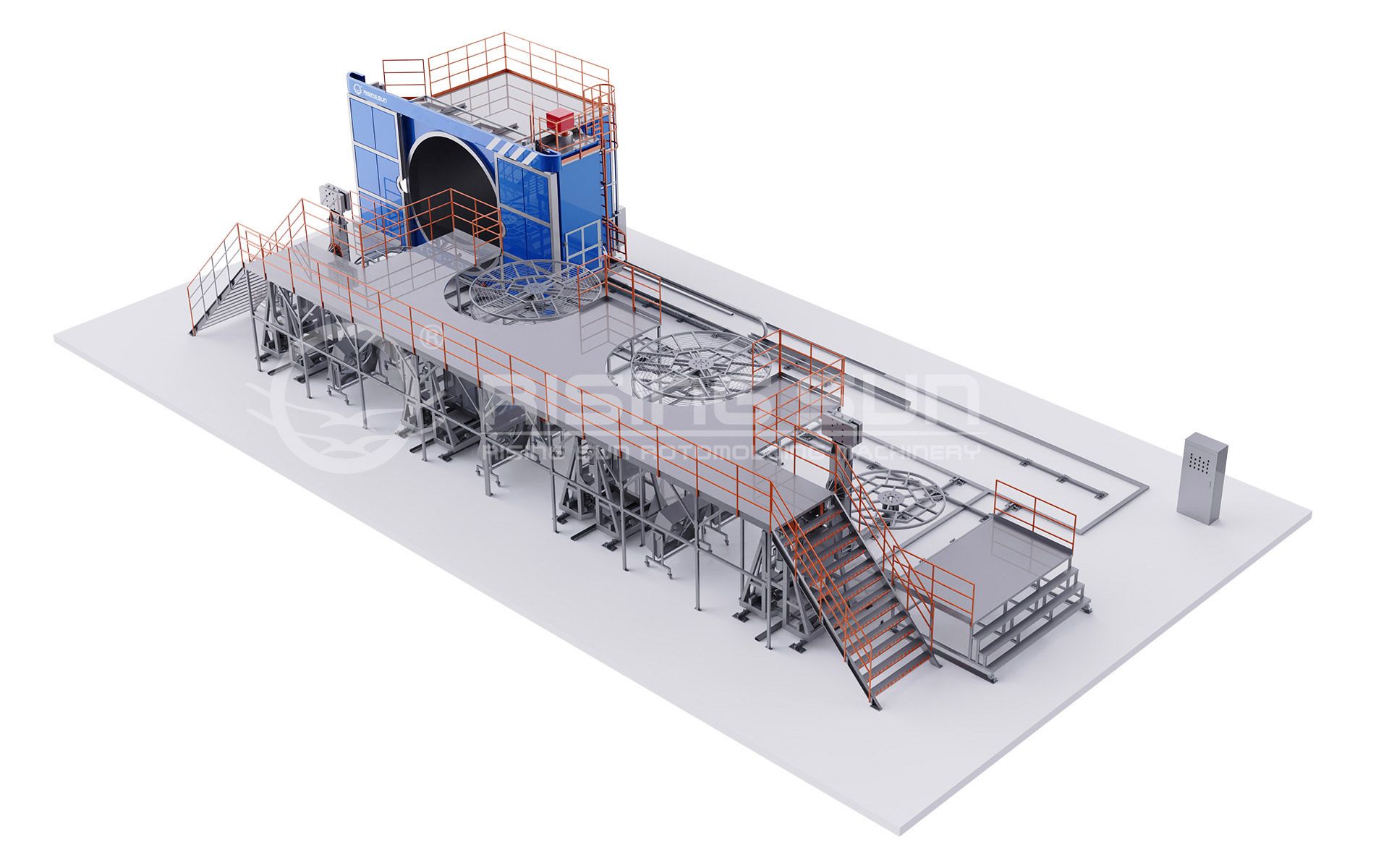
Manufacturers pushing for higher production rates often face a familiar trade-off: faster cycles tend to introduce dimensional drift, which quietly undermines part fit. The solution lies in treating cooling time as a variable to be engineered rather than simply shortened. By using mold inserts with conformal cooling channels that follow the part geometry, heat is removed more uniformly, allowing the polymer to solidify under stable conditions even when the press opens sooner.
Material selection plays a surprisingly direct role here. Semicrystalline resins with predictable shrinkage behavior give process engineers the headroom to cut cycle times without chasing dimensional corrections after each run. Pairing these materials with optimized gate locations and holding pressure profiles means the part reaches its final geometry faster and more consistently, so downstream assembly doesn't inherit alignment headaches.
Verification keeps pace through automated optical inspection systems that sample critical dimensions on every shot, not just periodic audits. This closed-loop feedback flags any drift the moment it appears, allowing real-time adjustments to melt temperature or injection speed. The result is a production line that sustains high throughput while every part still slips into its mating component without force or play.
Reconfigurable Shuttle Paths for Mixed-Model Assembly
In mixed-model assembly lines, a fixed shuttle route quickly becomes a bottleneck when product variants change several times an hour. Reconfigurable paths let the system redraw acceptable travel corridors on the fly based on current build sequences, station workloads, and shuttle positions. That shift from static track layouts to software-defined routing keeps material flow from locking into a single brittle pattern.
The practical value shows up when a high-running model suddenly shares the line with a low-volume option requiring extra fastening or testing. Instead of sending every shuttle through the same spine, the control layer assigns alternative shortcuts or bypass segments only where the mix demands them. This selective reconfiguration reduces congestion without forcing a full line stoppage, and it gives engineers a way to tune balance delay as the production schedule evolves.
Inline Buffering That Smooths Out Process Variability
A slight delay at one station can easily ripple down the line, forcing operators to wait or rush through their next cycles. Inline buffering places a small, deliberate amount of work-in-process between steps, so a brief hiccup upstream doesn't immediately starve the next operation. This decoupling gives each section of the line just enough independence to keep moving instead of locking into a single, rigid cadence.
When upstream output slows for a few seconds, the buffer feeds the downstream process until the issue clears. Once the upstream station recovers, it refills that buffer without disrupting the rest of the flow. Over a shift, these small cushions absorb the normal ebb and flow of manual work, minor jams, or material handling delays, which reduces forced stops and makes the overall throughput far more predictable.
Compact Drive Systems That Free Up Floor Space
Bulky drivetrains once forced facility managers to sacrifice valuable square footage just to keep production lines running. Compact drive systems take a different approach, integrating motors, gearboxes, and controls into streamlined units that mount directly onto conveyor frames or machine housings. This eliminates the need for sprawling floor-mounted cabinets and auxiliary platforms, instantly reclaiming aisles and operator walkways. In high-density packaging halls or assembly cells, those reclaimed meters translate into smoother material flow and safer access for maintenance crews.
Beyond simple space savings, the reduced footprint changes how engineers lay out entire lines. Instead of designing around a drive’s physical envelope, they can place machines closer together or add buffer zones without hitting capacity limits. Many compact drives use hollow-shaft or direct-coupling designs that slide onto existing rollers, removing belt guards and long coupling shafts that otherwise eat up clearance. The result is a cleaner, less cluttered production environment where every square meter contributes to throughput rather than housing idle hardware.
Facilities with older layouts feel the benefit most acutely. Retrofitting a traditional gearmotor setup often means knocking down walls or rerouting utilities to accommodate oversized equipment. Compact drives, by contrast, fit into the same envelope as the driven component itself, making upgrades possible during planned downtime. Operators notice the difference immediately: fewer trip hazards, easier forklift paths, and enough room to wheel in tool carts without stopping the line. Freeing up floor space is not just a facilities metric—it directly supports lean workflows and faster changeovers.
Condition Monitoring Built Into Every Shuttle Axis
Every shuttle axis carries its own real-time condition monitoring system, so you're never left guessing about wear, temperature, or vibration. Instead of waiting for a scheduled inspection or a sudden failure, the axis continuously reports its own health. Small changes in friction or alignment are caught long before they become costly downtime events.
The sensors are arranged to capture both macro movements and micro anomalies. A subtle drift in bearing temperature or a slight increase in drive current triggers an early flag, allowing maintenance to be planned around production, not the other way around. The result is less unplanned intervention and a clearer picture of how each axis behaves under actual load.
Operators can pull up trend data for any axis at any time, comparing today's performance against past baselines. This makes it easier to spot gradual degradation that a quick visual check would miss. Condition monitoring isn't an add-on here — it's built into the axis from the start, so every cycle becomes part of the diagnostic record.
FAQ
It uses linear motor-driven shuttles with closed-loop feedback and vision-guided alignment, allowing positioning repeatability within a few microns. The rigid frame also dampens vibration during high-speed moves.
Depending on the process, shuttles can index between stations in under 0.5 seconds, with synchronized servo control keeping overall takt time low even for multi-step assemblies.
It's popular in electronics, medical device, and automotive component assembly where small parts require fast, precise handling. The modular design adapts to cleanroom or high-volume lines.
Yes, the shuttle pallets and station tooling are designed for quick swapping. Recipe-driven controls let operators change programs without mechanical adjustments.
It typically integrates with bowl feeders, tray stackers, or pick-and-place modules. Vision cameras verify orientation on the fly and correct any misalignment before joining.
Linear guides and drive belts need periodic lubrication and tension checks. The self-diagnostic software flags wear before it affects accuracy, so downtime is minimal.
In-line shuttles offer easier expansion and longer process sequences. You can add stations without changing the core footprint, while rotary systems are often limited by circumference.
It supports OPC UA and MQTT for real-time data sharing, plus remote diagnostics. Production metrics like cycle time and yield can be pushed to existing MES.
Conclusion
The latest in-line shuttle systems from this machine builder address a persistent assembly challenge: holding tight tolerances while moving parts at a pace that keeps entire lines productive. Rather than treating precision and speed as competing goals, the design wraps both into the same motion architecture. Shuttle axes achieve micron-level positioning that remains stable over millions of cycles, so downstream robots and presses can rely on consistent pick-up locations without frequent recalibration. At the same time, high-cycle throughput is maintained by minimizing dwell and transfer times, and the shuttles do not sacrifice part fit for raw speed. Reconfigurable shuttle paths let engineers reroute carriers for mixed-model assembly without rebuilding the entire transport layer, which matters when product variants change shift to shift.
Inline buffering is integrated directly into the shuttle loop to absorb process variability—if one station slows for a tool change or a brief jam, upstream and downstream stations keep moving instead of forcing a line stop. The drive systems are deliberately compact, freeing floor space that would otherwise go to bulky chain or belt returns, so the same production area can host more value-adding stations. Condition monitoring built into every shuttle axis constantly tracks motor load, temperature, and position error, sending alerts before a bearing degrades or a guide needs lubrication. This combination turns the shuttle line into a self-aware transport system that keeps precision and speed from drifting apart over long production runs.
Contact Us
Contact Person: Sharon Zhu
Email: [email protected]
Tel/WhatsApp: 8615712666272
Website: https://www.risingsunroto.com
