
China Mixer Agitator Essentials: Optimize Your Industrial Mixing Process
2026-08-27
Most mixing problems don't come from the motor—they come from assumptions. A China mixer agitator that works beautifully for one plant might quietly sabotage another if the impeller type, shaft speed, or tank geometry doesn't line up. At Sinou, we've learned that optimizing your industrial mixing process starts with questioning those defaults. In the sections ahead, we'll break down the essentials that often get skipped in spec sheets: flow patterns, viscosity traps, and the small adjustments that deliver noticeable gains. If you've ever wondered why your blend time drifts or your solids settle, you're in the right place.
Why Impeller Geometry Matters More Than Motor Power in Chinese Mixers
Walk into any Chinese mixing equipment showroom and the sales pitch will almost always start with horsepower. Bigger motors, higher torque, more kilowatts—these are easy numbers to print on a brochure. But anyone who has spent real time on a production floor knows that a 15 kW motor paired with a poorly designed impeller can underperform a 7.5 kW unit whose blade profile was actually thought through. The impeller is where the material meets the machine; motor power just determines how fast you can spin a bad idea.
Chinese mixers face a unique set of challenges: high-viscosity pastes, shear-sensitive emulsions, and powders that clump the moment they touch liquid. A straight radial blade impeller might look aggressive, but it often wastes energy by throwing material outward without creating axial circulation. In contrast, a modified pitched-blade or contoured hydrofoil design can achieve the same bulk turnover at lower RPM, reducing both heat buildup and air entrainment. That means less product degradation, fewer rejected batches, and lower cooling costs—benefits no motor upgrade can deliver on its own.
The real difference shows up when you scale from lab to production. A geometry that works in a 50-liter pilot tank rarely translates directly to a 5000-liter vessel unless the impeller-to-tank diameter ratio, blade count, and tip clearance are recalculated. Motor power simply scales linearly; mixing intensity does not. Many Chinese manufacturers now recognize that investing in CFD-optimized impeller shapes—even with modest motors—yields better repeatability and shorter mix times than simply bolting on a larger drive. In the end, you can always add more horsepower later, but a bad impeller design will keep costing you with every single batch.
Navigating Material Compatibility From Stainless Steel to Polymer Linings
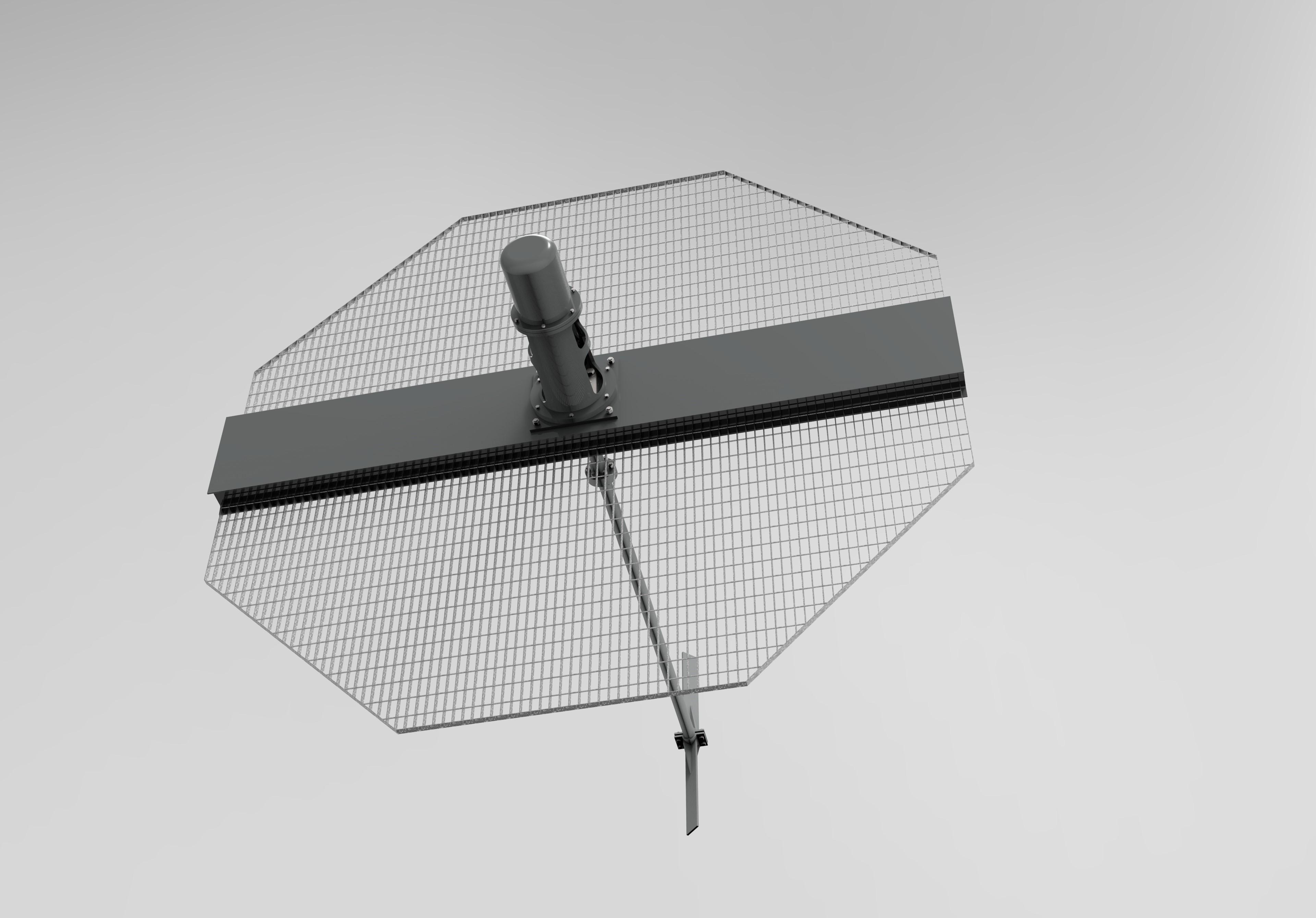
Material selection often starts with stainless steel for its structural reliability, but aggressive chemicals, chloride stress cracking, or extreme pH can quickly expose its limits. Moving to a polymer lining—whether PTFE, PVDF, or a spray-applied epoxy—shifts the problem from the metal's corrosion rate to the lining's adhesion, permeation, and temperature ceiling. A practical approach is to map the full chemical stream, including trace contaminants and cleaning cycles, not just the primary process fluid.
Polymer linings bring their own compatibility constraints. A fluoropolymer handles most acids but can deform under high vacuum at elevated temperatures, while a softer polyolefin may be cost-effective yet vulnerable to aromatic solvents. Field experience shows that the most common failures occur at flanges, nozzles, and weld seams where lining thickness varies or where mechanical stress concentrates. Successful navigation means testing coupons under actual operating conditions and questioning the assumption that a higher alloy grade is always safer than a well-chosen lining.
Calculating Torque and RPM for High-Viscosity Blending in Chinese Agitators
Getting the torque and RPM right for high-viscosity blending in Chinese-made agitators comes down to understanding how the fluid actually resists the impeller. Instead of relying on generic shear-rate estimates, start by pulling viscosity curves from the material supplier at the exact blending temperature and solids loading you expect. For a typical pseudo-plastic slurry in a 2000-liter tank, the effective viscosity near the blade tips can drop by an order of magnitude compared to the low-shear value, which means a motor sized from a single-point reading will either stall or waste energy. Field technicians often adjust the power number by measuring the current draw on an existing unit, then back-calculating the actual torque demand before specifying a new gearbox.
RPM selection is less about hitting a textbook tip speed and more about avoiding dead zones behind the baffles. Chinese agitator designs frequently use a close-clearance anchor or a double-helical ribbon for viscosities above 50,000 cP, where the Reynolds number falls below 10. Under these conditions, torque scales almost linearly with speed, but the mixing time plateaus—so running faster simply heats the batch without improving uniformity. A practical approach is to run a torque rheometer test with a scaled impeller, then apply the Metzner-Otto constant to convert RPM into an average shear rate. This gives you a torque curve you can overlay with the gearbox’s thermal limit, which is often the real constraint in continuous duty mixing.
One overlooked factor is the mechanical loss in the shaft and seal assembly. Chinese-built agitators sometimes use packed glands or double mechanical seals that add 10–15% friction torque at low speeds, especially if the seal flush pressure is set too high. When calculating the required motor power, take the hydraulic torque from the impeller, add the seal drag and any side-entry bearing losses, then apply a service factor of at least 1.25 for viscosity swings caused by temperature drops during overnight shutdowns. A quick sanity check is to calculate the specific power input in kW/m³—most high-viscosity blending jobs settle between 1.5 and 4 kW/m³, and anything far outside that range usually points to an error in the viscosity model or an overly conservative RPM choice.
The Hidden Cost of Poor Seal Design in Industrial Agitators
Leaks from a poorly designed seal rarely announce themselves with a sudden spill. More often, they begin as a slight dampness around the shaft, a faint product odor near the drive, or a gradual drop in batch consistency. Each of these signs points to a seal that is losing its grip, allowing process fluid to migrate into areas where it doesn't belong. Over time, the fluid attacks bearings, couplings, and even the gearbox, turning what should be a routine maintenance item into a cascading repair bill.
Beyond direct component damage, an underperforming seal forces operators into an uncomfortable choice: run the agitator slower to reduce leakage or shut down more frequently to replace worn parts. Both options eat into production capacity. In many plants, the true expense is not the replacement seal itself, but the lost uptime, the labor hours spent on unplanned teardowns, and the slow degradation of product quality when contaminants enter the mix. These costs are rarely visible on a single work order, yet they accumulate quietly across months.
The deeper issue is that seal performance depends on far more than material selection. Shaft runout, thermal expansion, pressure fluctuations in the vessel, and even the direction of rotation all influence how the seal faces interact. When design ignores these variables, no amount of aftermarket adjustment will restore a reliable seal. A better approach treats the seal as part of the agitator's dynamic system, not as a commodity component. Only then do the hidden costs disappear.
How to Audit Your Existing Mixing Line Before Upgrading to Chinese Equipment
Start by walking the floor with the operators who run the line daily, not just the engineers. Ask them where the line stops, slows down, or needs manual intervention—recurring material jams, inconsistent dosing, worn seals, or screw sections that require constant adjustment. These details rarely show up in maintenance logs but tell you exactly where a new mixer or feeder must fit into the existing process without creating new bottlenecks.
Next, open the control cabinet and check the actual automation stack. Write down the PLC brand, communication protocols (Profinet, EtherCAT, Modbus RTU/TCP), and whether I/O points are clearly labeled. Many Chinese suppliers offer their own control packages or prefer open standards, so knowing your current setup prevents costly signal converters or rewiring later. Run a quick data logging test to confirm the line can export real-time process parameters—this will determine how smoothly a new Chinese mixing unit can be tied into your existing recipe management.
Finally, measure physical dimensions and utilities before contacting any vendor. Record the exact footprint, hopper height, power supply voltage and phase, compressed air pressure, and even floor drain location. A surprising number of upgrade projects stall because a 480V vs 380V mismatch or tight clearance around the discharge chute was overlooked. Make a simple hand sketch showing cable entry points, maintenance access, and existing pipe connections; share this with potential Chinese equipment suppliers so they can propose a drop-in retrofit instead of a costly line rebuild.
Real-World Mixing Results Comparing Top-Entry vs Side-Entry Agitators
Field comparisons from large storage terminals often show that side-entry agitators consume 30–40% less power per unit volume than top-entry designs when preventing sludge settlement in crude oil tanks. However, the trade-off appears in mixing time: side-entry units can take twice as long to reach uniform temperature or composition after a product switch. Maintenance data adds another layer—side-entry mechanical seals can be replaced without emptying the tank, while top-entry units usually require confined space entry and scaffolding, driving up turnaround costs in real operations.
In solids suspension and fast chemical neutralization duties, top-entry agitators consistently outperform side-entry configurations. The downward axial flow from a top-mounted impeller breaks concentration gradients far more quickly, which matters when reaction completion is time-sensitive. On the other hand, for very large flat-bottom tanks, two or three side-entry mixers create a gentle horizontal swirl that keeps particulates moving without excessive shear. Operators have noted that side-entry impellers are more prone to fiber wrapping in pulp or polymer service, whereas top-entry designs with high-horsepower drives handle viscous or stringy materials with fewer unplanned stoppages.
FAQ
For thicker fluids, anchor or helical ribbon impellers usually outperform standard pitched-blade designs. They sweep close to the tank wall, prevent material from hanging up, and keep the batch moving without needing extreme speeds. You'll often see these paired with a low-rpm gear drive on Chinese units to preserve torque.
Sample the batch at set intervals and track the coefficient of variation for key parameters like temperature, pH, or concentration. If you're still seeing gradients after your usual run time, the issue is rarely just the timer. It usually points to a mismatch between impeller diameter, baffle placement, or shaft speed.
Retrofit with corner baffles or relocate the agitator off-center. A common trick in Chinese plants is to add a small secondary impeller lower on the shaft, which breaks up stagnant areas near the bottom without needing a second motor.
Yes, and this is where many buyers save money. You can specify 316L stainless, Hastelloy, or even rubber-lined shafts depending on your chemistry. Most Chinese factories will fabricate a longer shaft and add a steady bearing rather than forcing you to buy a whole new gearbox.
Vibration typically comes from an under-loaded impeller. With a lighter fluid, the same rpm creates less hydraulic resistance, so the shaft may wobble, especially if there is no bottom support. Try increasing the liquid level, slowing the drive, or adding a stabilizer ring to the blades.
Check gearbox oil every 500 running hours and inspect shaft runout with a dial indicator each quarter. Grease the top bearing monthly if it's exposed to dust or washdown. These small checks catch seal leaks and bearing wear before they turn into a broken shaft.
Often yes, but not for every batch. A VFD helps when you run multiple products on one line, letting you dial in shear-sensitive or low-level mixes. For a single dedicated process, a fixed-speed gear drive is usually cheaper and has fewer components to fail.
In many cases, yes. You may need a larger impeller diameter or a second impeller, but the gearbox torque rating is the real limit. Check the nameplate torque and compare it to the new mixing duty before spending on a full replacement.
Conclusion
When optimizing an industrial mixing process with Chinese mixer agitators, the focus often falls on motor power, but experienced engineers know that impeller geometry shapes the flow pattern, shear rate, and blending efficiency far more than raw horsepower. A well-chosen hydrofoil or pitched-blade turbine can achieve the same turnover with less energy while reducing dead zones in the vessel. Equally important is material compatibility—stainless steel handles aggressive chemicals and food-grade applications, but polymer linings or coatings may be necessary for corrosive or abrasive media, preventing costly replacement and contamination. Ignoring these fundamentals leads to underperformance even with a powerful drive.
Torque and RPM calculations for high-viscosity blending must account for non-Newtonian behavior, as a mixer that works for water will stall in a thick polymer melt. Hidden costs often arise from poor seal design, where leakage or frequent maintenance erodes the initial savings of a lower-priced unit. Before upgrading to Chinese equipment, audit your existing mixing line: measure blend time, power draw, and product quality, then compare top-entry versus side-entry agitator results under real conditions. A side-entry unit may excel in large storage tanks with low shear requirements, while top-entry configurations offer better solids suspension. This holistic approach turns a simple purchase into a process improvement.
Contact Us
Contact Person: HaiYan
Email: [email protected]
Tel/WhatsApp: +86 18957325588
Website: https://www.senyoubeton.com/